In the Anthropocene, to pay attention to nature is to fall in love, only to watch your beloved fade away. To marvel at the wonders of the present, only to yearn for the far more abundant past. To live in comfort, only to realize that your stability is a house of cards—and a windstorm is coming.
Maybe that’s why so many of us choose to ignore the nonhuman life around us. Otherwise, the pain and grief are too strong.
Like many urban residents, I grew up enamored with science but distanced from nature. I did not know what species of trees lived in my front yard, let alone what birds passed through on their annual cross-continental voyages. I knew the general cycles of the seasons, but not in enough detail to notice them shifting over the years.
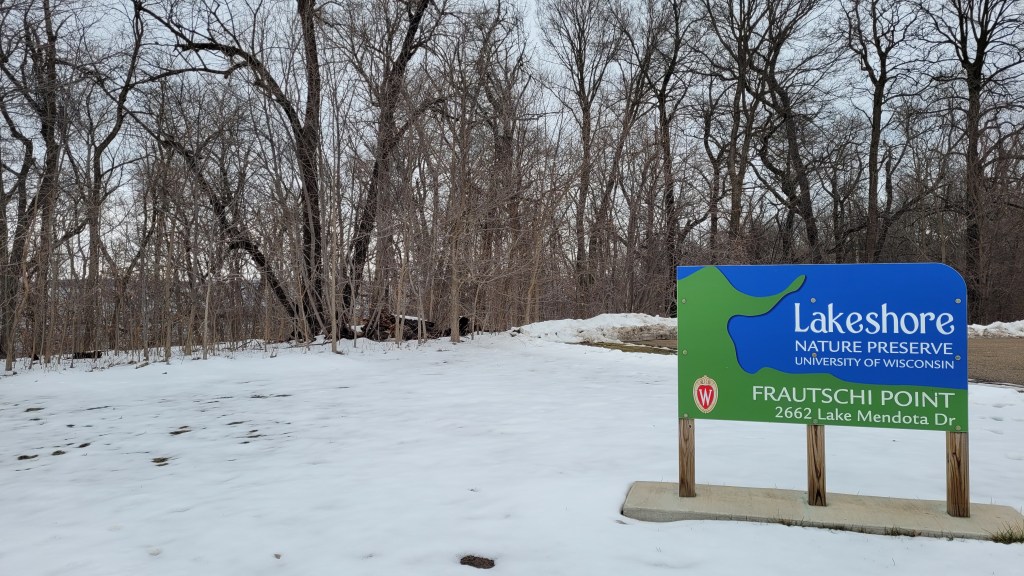
When I moved to Madison, I found myself living within a short walk of the Lakeshore Nature Preserve. The woods drew me in, the lake hypnotized me, the prairie filled my soul. Here, I have begun to get to know the natural world more intimately. As I have learned the names, stories, and seasonal patterns of my nonhuman relatives, I have found many reasons for grief, true. Yet I have also found many reasons for hope. This is a place where Madisonians are taking small but meaningful steps to heal our collective relationship with the Earth.
Fall
The warning signs are subtle at first. Gaze upward into the canopy of an ash tree, and you might notice a few dying branches. Scrutinize the bark, and you might spot a constellation of holes drilled by woodpeckers. Later, if the bark splits open, you’ll see the definitive proof: larvae of the Emerald Ash Borer are eating their way through the tree’s tissues, creating a labyrinth of tunnels that spell the tree’s doom. A healthy forest can suffer the deaths of 98% of its ash trees within six years of the beetle’s arrival.
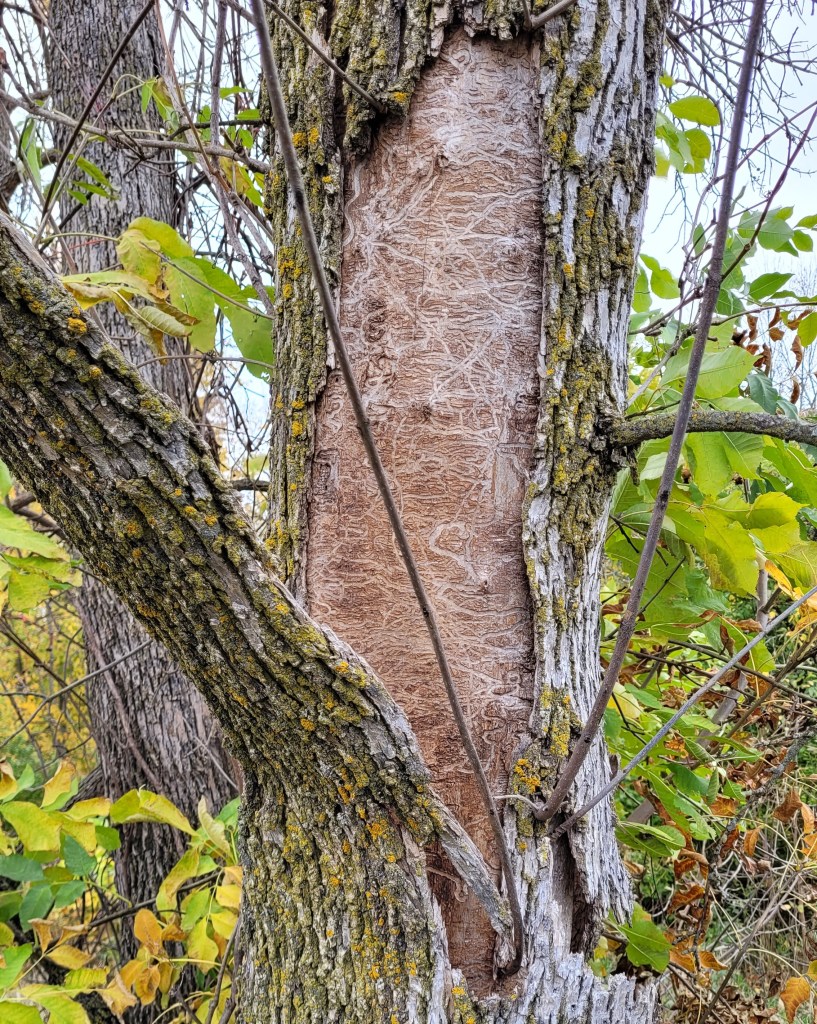
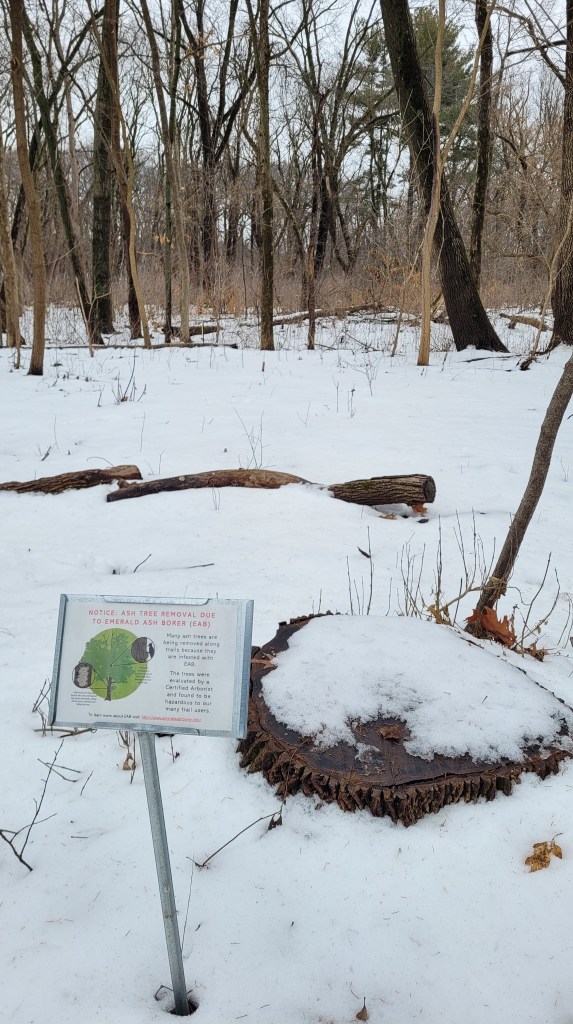
Humans inadvertently brought the Emerald Ash Borer to North America sometime in the late twentieth century, and we continue spreading it through firewood and nursery trees. Since its first detection in Michigan in 2002, the beetle has reached 36 states, including 71 of Wisconsin’s 72 counties. It has killed hundreds of millions of ash trees.
I first learned about the Emerald Ash Borer while walking through the Lakeshore Nature Preserve. These 300 acres just west of the University of Wisconsin–Madison campus were home to Native Americans, including the ancestors of today’s Ho-Chunk people, for 12,000 years before Europeans arrived. Then the colonists replaced forest, marsh, and prairie with farmland. Subsequent generations of Madisonians have worked to restore some of the old ecosystems, and now the reforested sections of the preserve contain at least 45 species of trees, including White Ash and Green Ash.
Living so close to the woods helped me realize how little attention I used to pay to the trees that we depend on for the oxygen we breathe. Now, I see the steadfast Bur Oaks protecting the soil moisture, I see the patient Sugar Maple saplings awaiting their time in the sunlight, I see the eccentric Shagbark Hickories with strips of bark peeling away. I see the drooping leaves of the Staghorn Sumac, deep violet and fiery red in the autumn, anonymous to me no more.
But I also see the stumps where White Ash and Green Ash trees stood until recently. In their place stand signs announcing “NOTICE: ASH TREE REMOVAL DUE TO EMERALD ASH BORER (EAB).” I cannot help but think of the American Chestnut, once so abundant that its nuts were used as informal currency in Appalachia, now reduced to a shadow of a memory, its ghost lingering in the lyrics of a treasured Christmas song. Will ash trees meet the same fate?
If the trees of the nature preserve are anchors, connecting the air in my lungs to the soil beneath my feet, then the birds are telegrams, connecting my ears to those of people hundreds or thousands of miles away. Each fall and spring, migrating birds gravitate to the nature preserve to rest and refuel on their journeys. By paying more attention to the waves of travelers, as well as the behavior of the year-long residents, I have deepened my awareness of seasonal cycles. I experience joy every day by identifying the singers I hear whenever I am outside.

But I cannot appreciate birds’ beauty without thinking of their plight. North American bird populations have crashed by 29% since 1970—that’s three billion birds gone. In our quest to make the landscape as “useful” to us as possible, we have forgotten that we depend on healthy ecosystems for our own long-term wellbeing. Birds directly benefit us by pollinating plants, eating pests, and dispersing seeds.
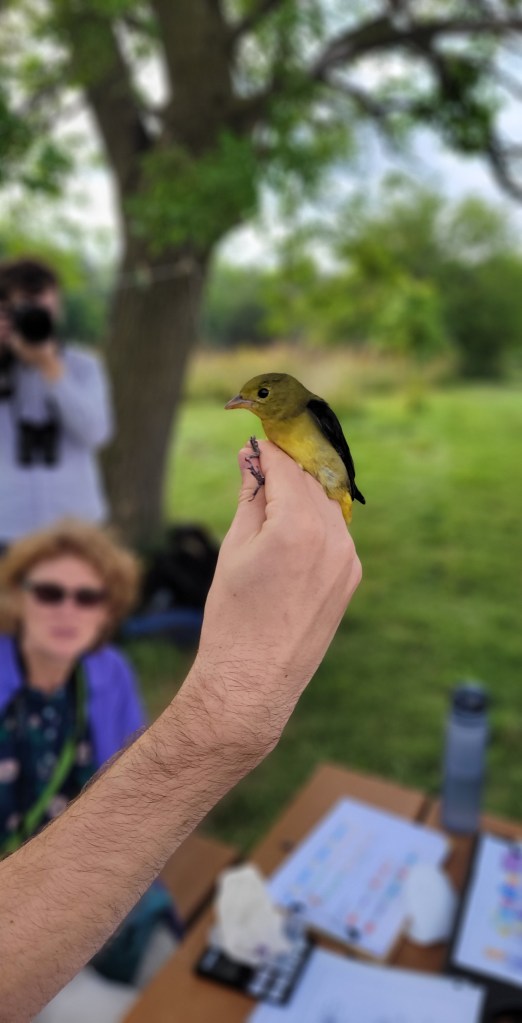
To help bird populations recover, we first have to better understand what is happening to them. That’s the goal of the Biocore Prairie Bird Banding Observatory, a volunteer group that has banded birds in the nature preserve since 2001. Each Saturday morning from April to September, the volunteers set up mist nets in a small patch of restored prairie that slopes down to the shore of Lake Mendota.
When I saw them at work during fall migration, a female Scarlet Tanager flew into the nets. A volunteer carefully measured her weight, the length of her bill and wings, and more. He attached a band with a unique identifier to the bird’s leg. Then he opened his hands, and she burst into the air to continue her journey to South America.
Maybe another group of community scientists hundreds of miles away will recapture her. If so, their observations will reveal her trajectory in flight and in health, adding bit by bit to our knowledge of birds.
But knowledge is…knowledge. On its own, it does nothing to reshape the societal systems that got us into this mess in the first place.
Winter
Humans’ careless long-distance travel is spreading the emerald ash borer, habitat destruction is threatening birds, and the burning of fossil fuels is changing the climate—if you take a narrow view of cause and effect. At their core, all these problems can be traced back to one underlying source: the fallacious belief that humans are separate from the rest of nature.
By insisting that we are not part of nature, we have deceived ourselves into believing that we can take and take and take from it without consequences. And since we don’t pay attention to nature, we don’t notice how it responds to our actions, or if we notice, we don’t care. But we are inextricable from nature. Everything we do to it—whether caretaking or damaging—eventually arcs back onto us. And we can no longer ignore those ripple effects.
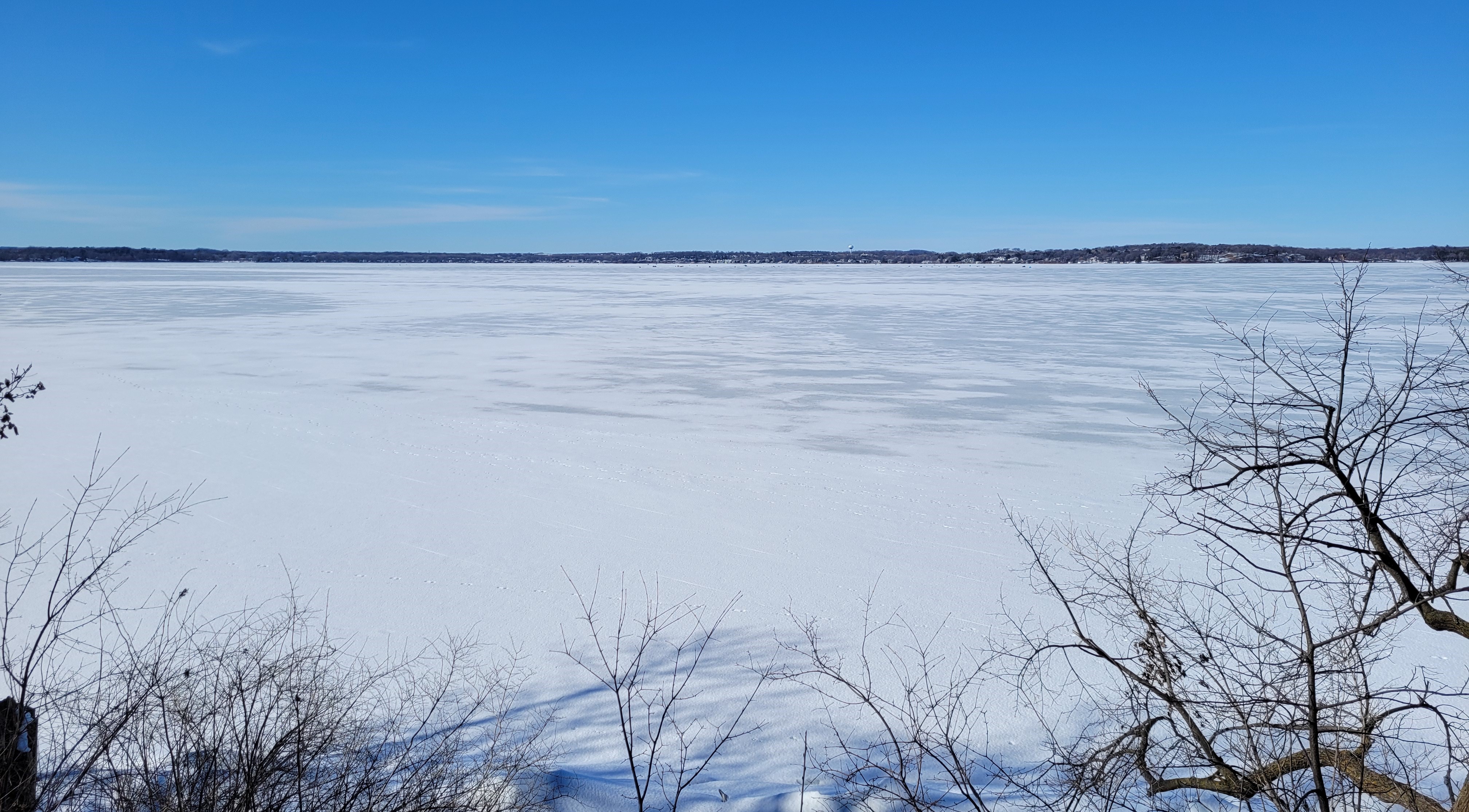
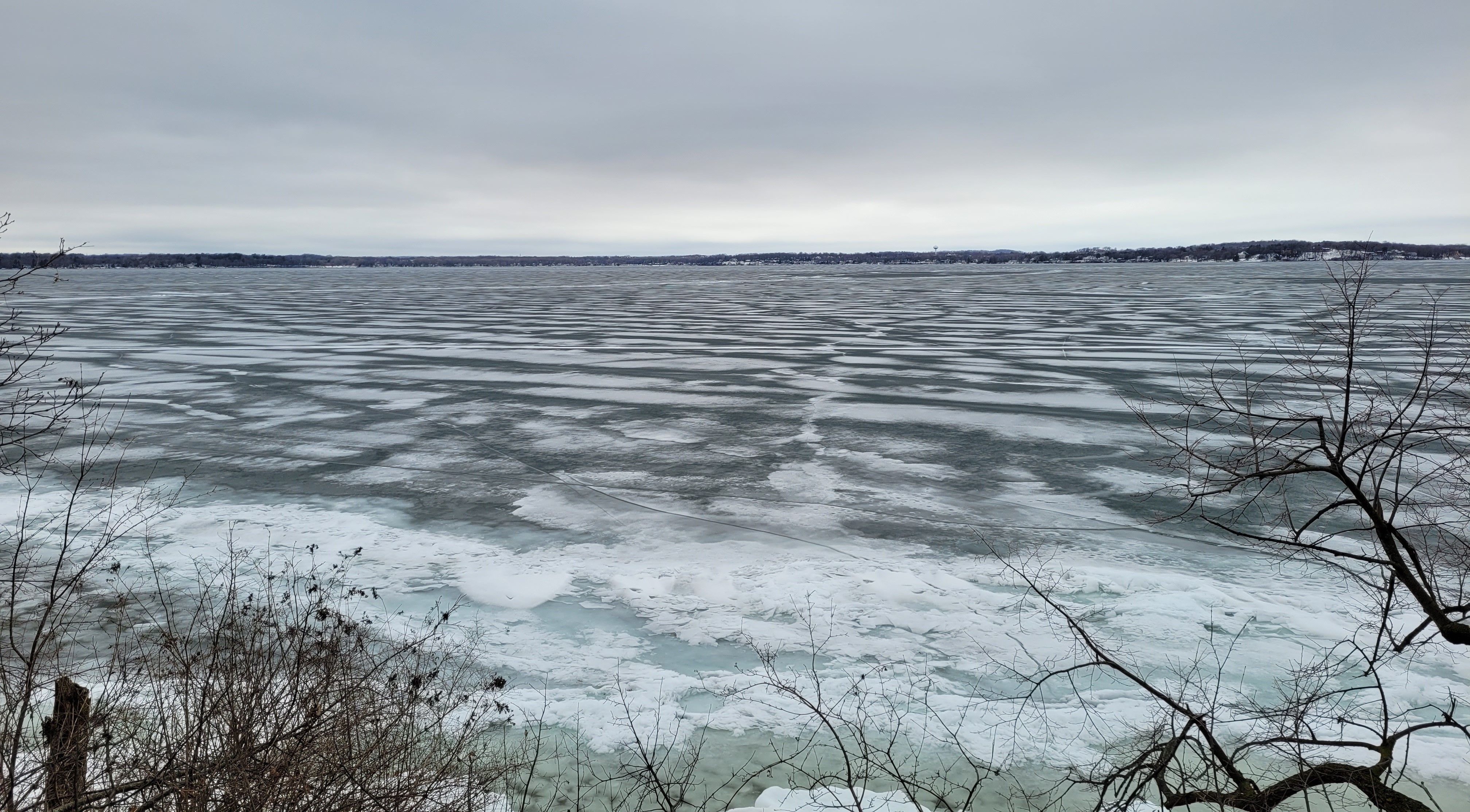
Wisconsin has a reputation as one of the states least vulnerable to climate change. But even here, the changes are already affecting human and nonhuman life. Take Lake Mendota, a source of pride for Madisonians. Although the time the lake spends frozen over fluctuates from year to year, it’s trending shorter due to the warming winters.
As it happens, my first two winters in Madison gave me a back-to-back comparison of Mendota’s past and future. In 2022–23, ice cover lasted 98 days, close to the average since record-keeping began in 1855. When I traipsed through the snowy woods to the lakeshore on February 11, 2023, I saw at least a dozen ice fishing camps near the center of the lake.
I visited the same spot the following winter on January 28, 2024. That day, the ice was already too thin to safely venture far from shore. The ice cover in 2023–24 lasted a mere 44 days—the second shortest on record. And the ice-off date was February 28, the second earliest on record. In addition to threatening our on-ice activities, shorter ice cover can hurt fish populations and cause toxic algal blooms.
In the coming decade, Lake Mendota may experience its first ice-free winter since it was formed by a retreating glacier more than 10,000 years ago.
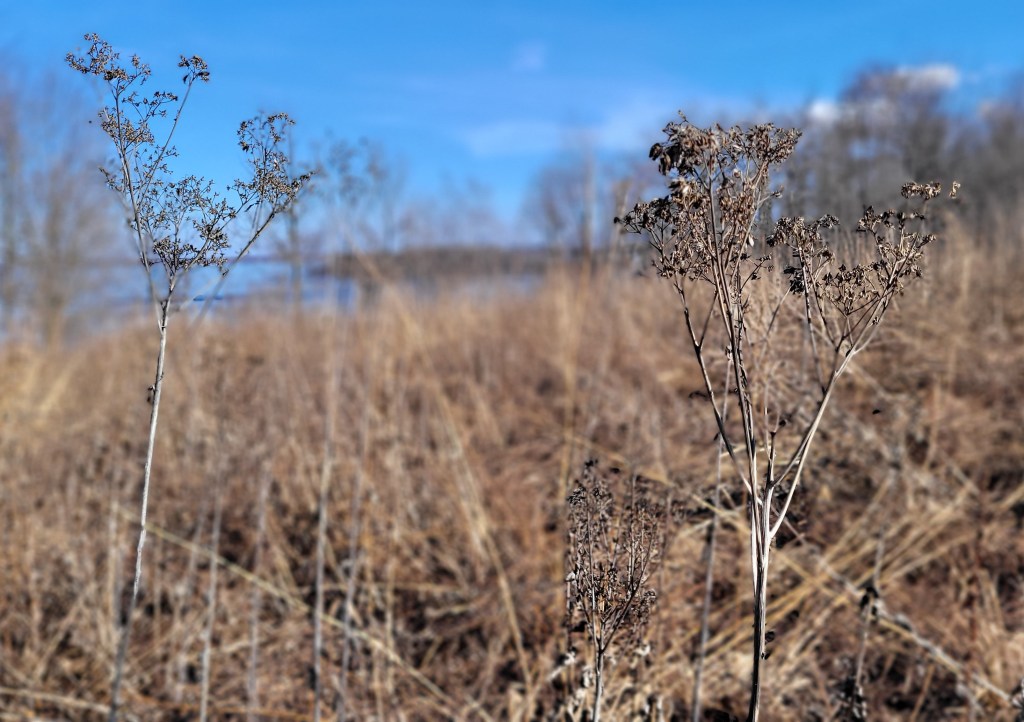
So yes, I grieve for what we have lost and what we will soon lose. But if I were to stop at grief, I would be paying attention to only part of the nature preserve’s teachings. I would be fixating on the apparently dead prairie grasses above the surface in midwinter. Up to two-thirds of the grasses’ mass is underground—and very much alive.
We can still create balance in our relationship with the rest of nature. I am able to walk from my apartment to a prairie only because other people are playing their part in our collective reconnection. The university began the Biocore Prairie on an abandoned agricultural field in 1997 with the goal of restoring a patch of the tallgrass prairie that used to blanket much of southern Wisconsin.
Reestablishing a prairie is a slow process. It requires collaboration, dedication, adaptability, perseverance. Countless students, staff, and volunteers have contributed to the project, their individually small actions combining to create tangible change. More than two decades in, the prairie is well on its way to thriving.
Spring
The graceful melodies of Song Sparrows. The tentative green buds of a Box Elder tree. And a whiff of smoke. Not barbecue smoke, not campfire smoke—something earthier. As I walked uphill along the edge of the prairie, I spotted the neon yellow uniforms. Then I glimpsed the dark orange flames, flickering low to the ground.
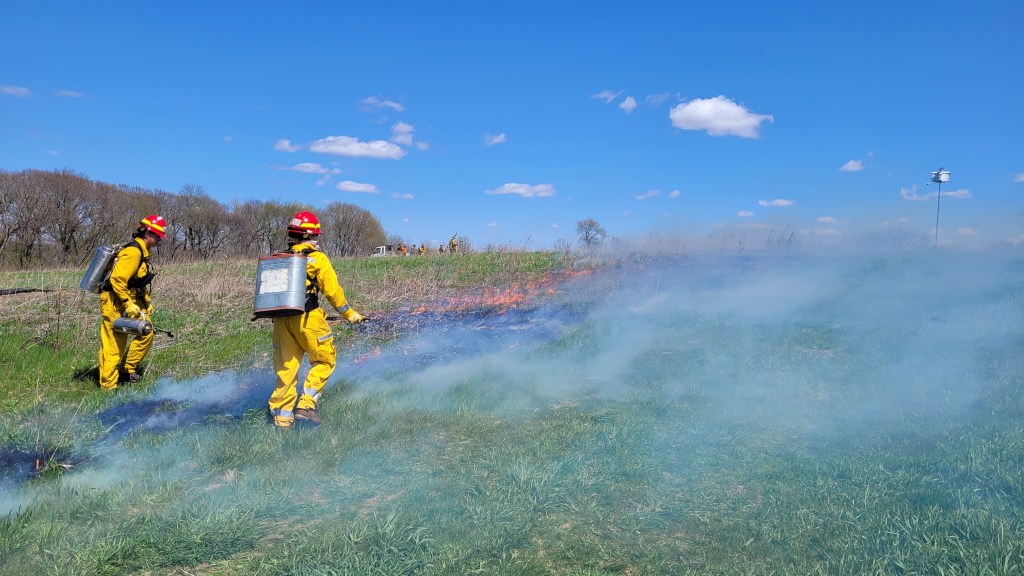
Since time immemorial, Native Americans managed the landscape with fire. Colonists and their descendants scorned fire and sought to banish it. Now, we have rediscovered the importance of periodic fire in many ecosystems, including tallgrass prairies. Low-intensity fires remove leaf litter and invasive plants and stimulate the growth of hardy prairie plants.
Each spring, students in the fire ecology class at UW–Madison learn to conduct prescribed burns and help the Biocore Prairie transition into a new season of growth. During the burn that I witnessed, students used drip torches to ignite the grass and a backpack water pump to control the path of the blaze. About 3.5 acres transformed from pale tan to inky black within hours.
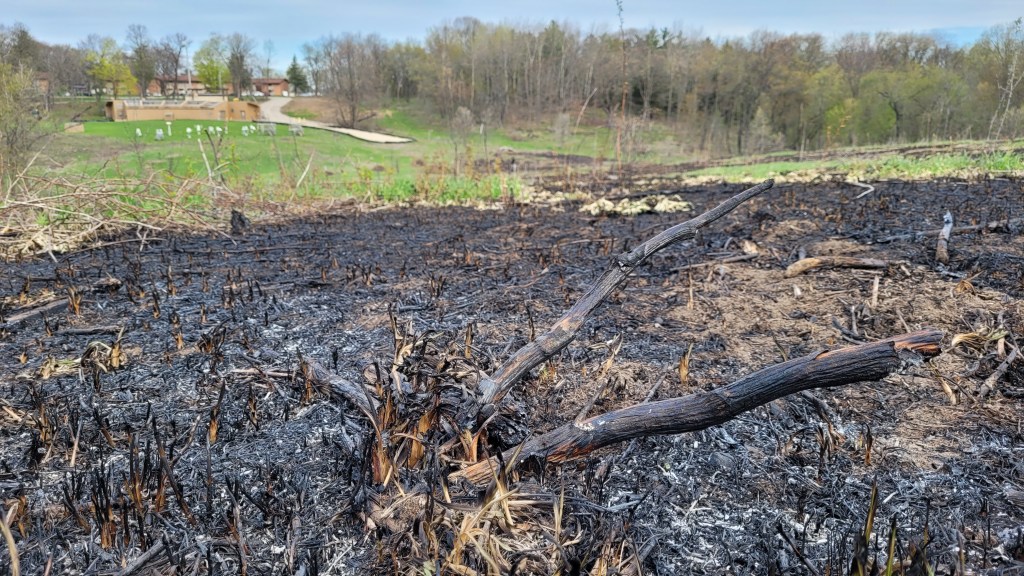
Two days after that burn, the smell of charred vegetation lingered above the prairie, overpowering the other spring scents as I crouched to look at the exposed earth. Among the burnt prairie grasses were scattered patches of unburnt Kentucky Bluegrass, a species not native to the Americas but now ubiquitous in our lawns (which cover far more land in the United States than any irrigated crop). Like fire, we need to act suddenly and drastically to address the interwoven crises we face. But the Kentucky Bluegrass reminded me that even drastic changes have to take into consideration the context of the world we have inherited.
No one expects the Lakeshore Nature Preserve to return to what it looked like centuries ago. The soil has changed, the climate has changed, the inhabitants have changed. While some invasive species like the Emerald Ash Borer are wreaking havoc, other nonnative creatures coexist harmoniously with the long-standing resident species. Similarly, the new approach to prescribed burns—a blend of traditional practices and modern tools—shows that we can be successful stewards of today’s landscape.
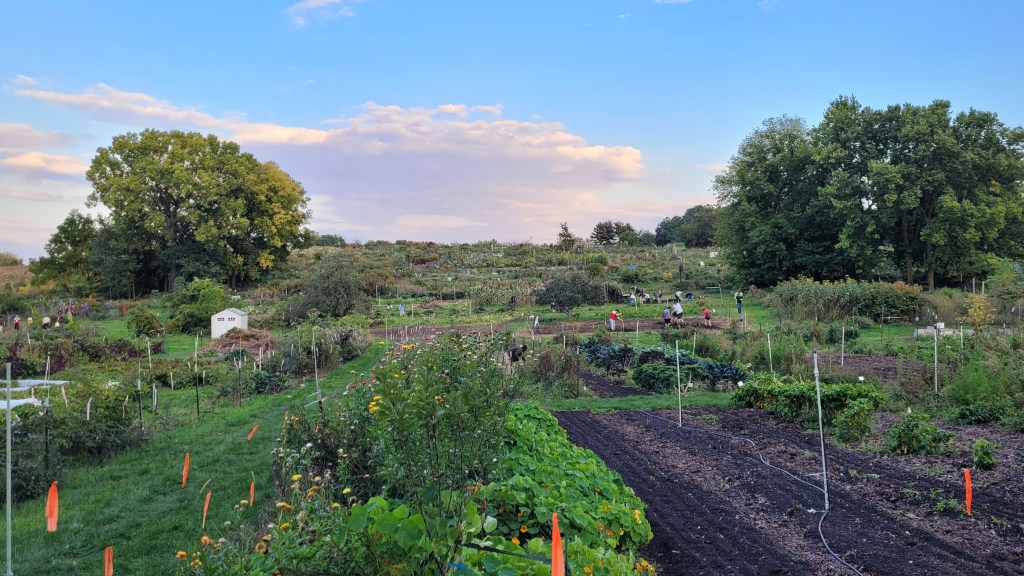
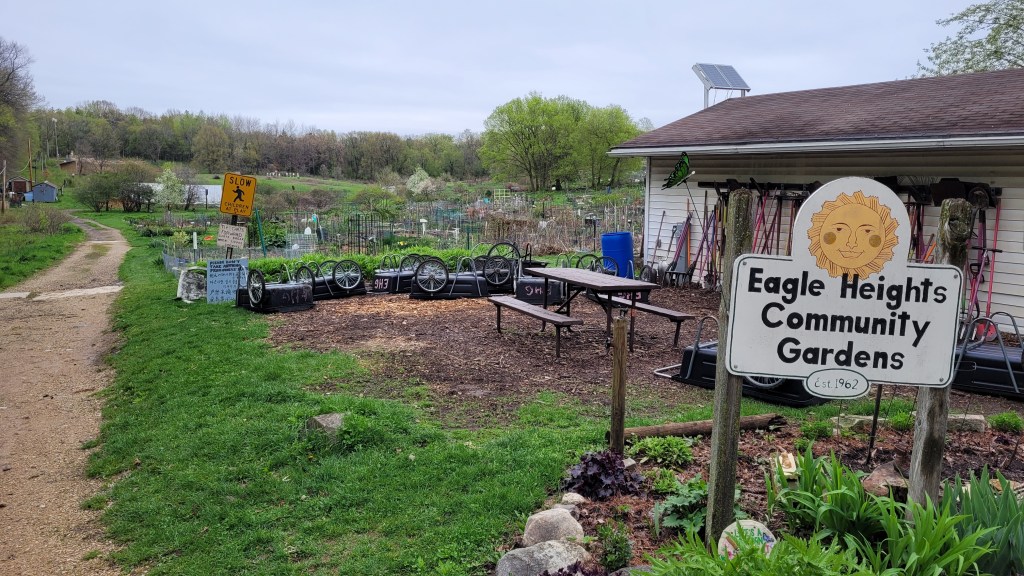
At the same time as the prescribed burns on the prairie, the adjacent gardens were coming to life for the growing season. Established in 1962 and hosting around 450 plots, Eagle Heights Community Gardens is one of the oldest and largest continuously operating community gardens in the country.
The only plant I have ever grown was an unfortunate little cilantro friend I kept on my kitchen table until my inept care put an end to the attempt. When I was growing up, it didn’t bother me that I didn’t know where my food was coming from. But now I recognize my ignorance as a symptom of my unnatural disconnection from the Earth. Industrial agriculture turned food production from a reciprocal relationship with the land into an extractive enterprise. Gardening offers the return of reciprocity.
Visiting the community gardens throughout the year, I enjoy watching the growth of squash, carrots, kale, peppers, beans, tomatoes. Even this simple act helps me appreciate my food more. I don’t yet have my own plot, so for now, I learn by talking with the gardeners.
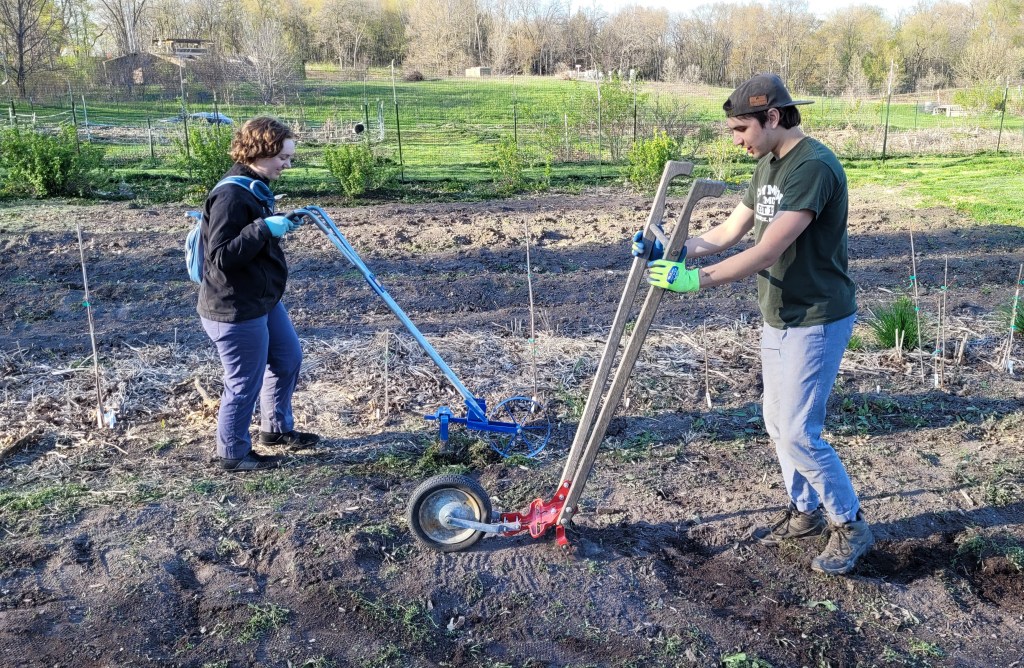
On one spring walk, I met two undergraduates hoeing a plot to prepare for planting. The food they grow there will go to the campus dining halls, nourishing their fellow students with sustainable local produce—and perhaps inspiring some of them to begin their own process of reconnection.
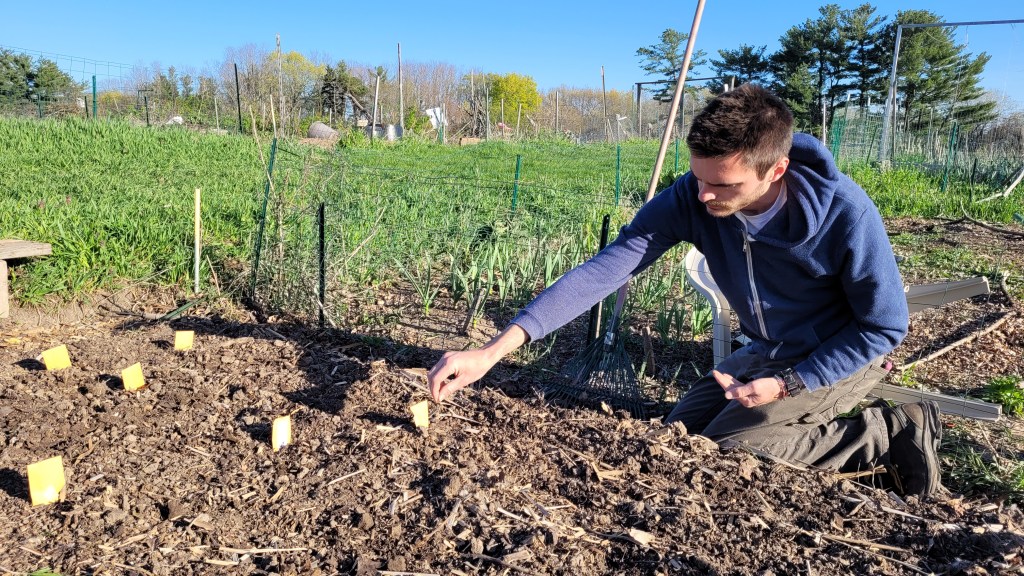
Every plant begins as a humble seed that finds its way into the soil with some help. Gravity, the wind, a bird, a mammal like us—interdependence is inescapable. Planting a seed is not an act of faith. It’s a promise. It’s a commitment to give to the Earth so that the Earth will give back to us in due time.
When I stand in the community gardens, surrounded by an expanse of lovingly tended plots, I see more than soil and plants. I see Madisonians renewing that age-old promise. I see the medicine that will heal our brokenness.
Summer
Whack, whack! As one student hit a tree branch ten times with a heavy stick, another student held a “beat sheet” to catch the small creatures falling from the foliage. Then we all huddled around to count the caterpillars, beetles, spiders, and ants running across the sheet.
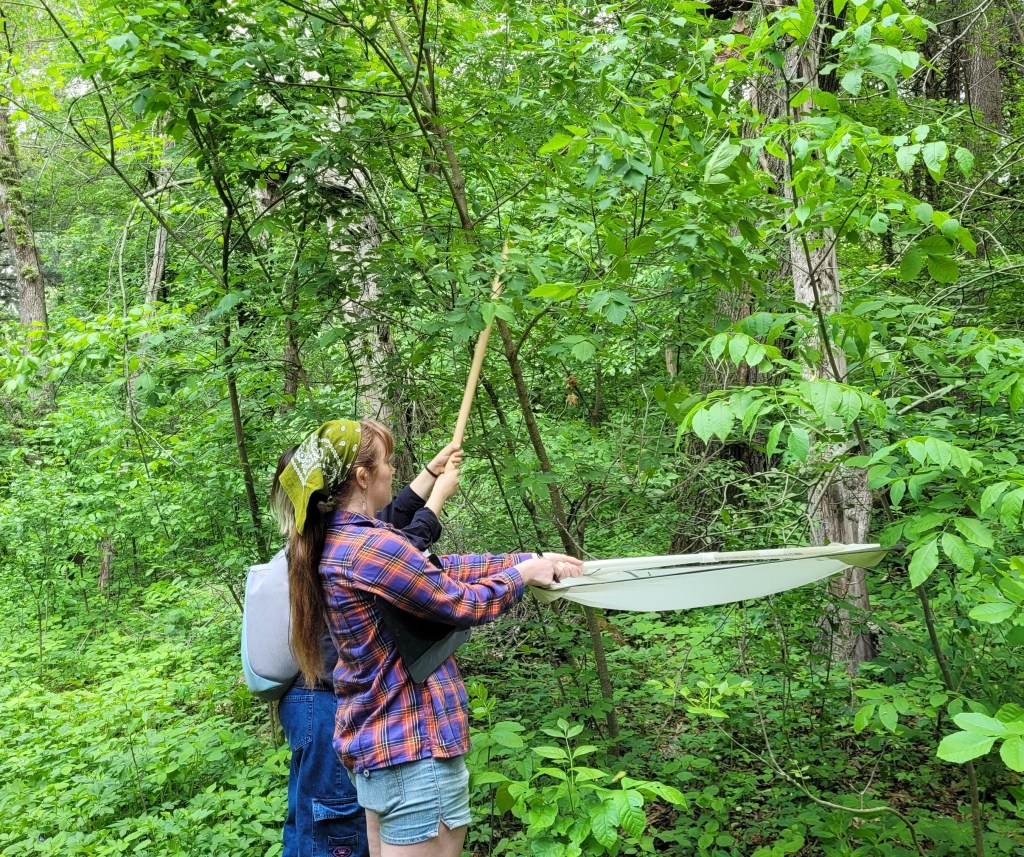
Like the prairie and gardens, the woods invite Madisonians into a deeper relationship with nature. Community science events all summer long give residents the opportunity to learn about our nonhuman relatives and contribute to our collective caretaking. For the first outing in summer 2023, we learned how to conduct arthropod surveys.
By spending an hour in the woods whacking and counting, we made a small addition to humanity’s understanding of how our actions impact arthropods. And just as important, I gained a new connection with these often-misunderstood friends. When I encounter an innocent spider in my apartment, I now thank it for eating potentially harmful creatures, and I do my best to transport it safely outside rather than killing it indiscriminately.
Here, again, with a closer relationship comes the pain of loss. Insect populations are plummeting even faster than bird populations, threatening the foundations of our food systems. The nature preserve is teaching me how to channel that pain into hope—not a passive hope, but rather one based in action.
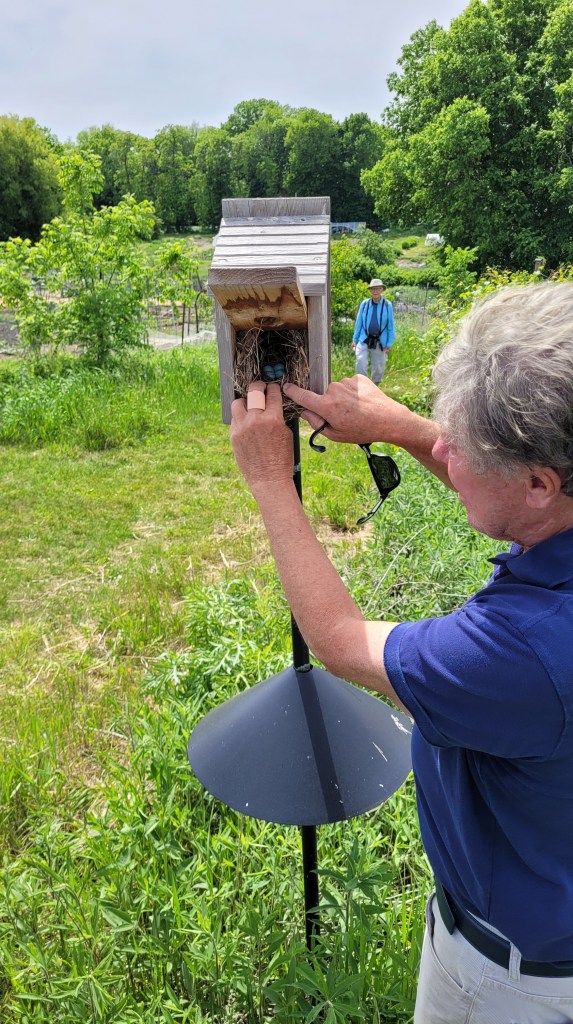
And the birds, the birds! I find hope in them, too. Along the edge of the prairie, nine nest boxes fill with families of Eastern Bluebirds, Tree Swallows, and House Wrens each summer. The boxes are a lifeline for the bluebirds, a large fraction of whom nest in human-created structures these days.
Here in Madison, a dedicated group of volunteers prepares the boxes for the birds’ arrival and monitors the boxes weekly during the nesting season. A nest full of bluebird eggs is a tangible sign that the volunteers’ efforts are making a difference.
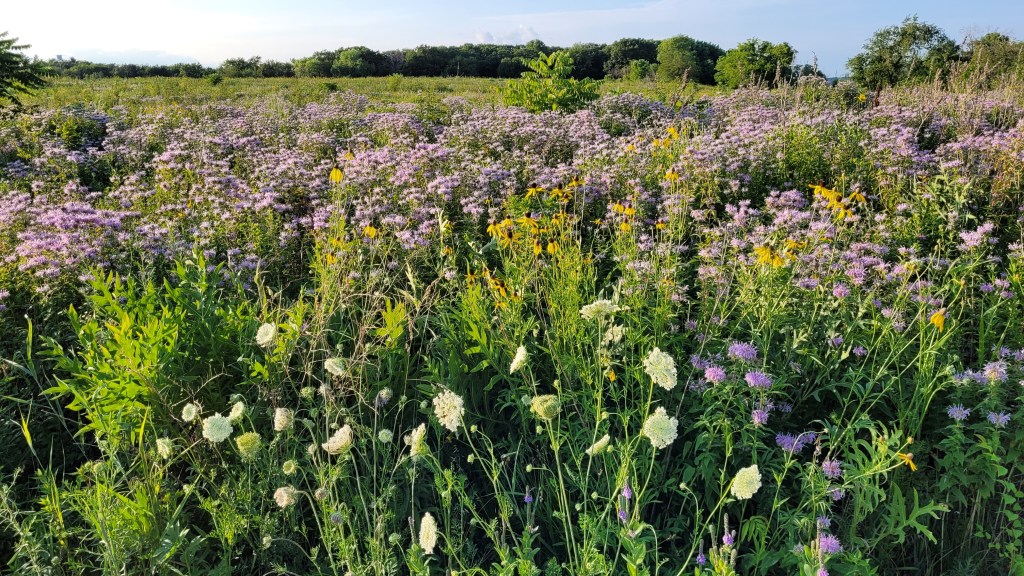
From snow to fire to exuberant life: the cycle is complete. Nourished by human hands, the prairie now nourishes us. Each time I come here, I feel my body and mind relax. I soak up the aroma of fresh blooms, the buzz of bumblebees, the rhythmic song of Common Yellowthroats hidden in the tall, dense grasses. They all cultivate my wellbeing now that I am paying attention to them.
I have yet to learn the names of all the native plants that bridge earth and sky here. But I know that each one was chosen thoughtfully, planted deliberately, and tended resolutely for years by Biocore Prairie workers.
Standing in this beautiful prairie, I could mourn that it is only a vestige of the land’s former abundance. Or I could take it as evidence of healing. I choose both. The prairie invites us to reflect on how we got to this point and how we can build a better future working with nature rather than against it.
There will be failures. We will most likely lose the vast majority of the 8 billion ash trees on the continent in the coming decades. Cities will be less green, forest ecosystems will weaken, and baseball players will have to find a different wood for bats.
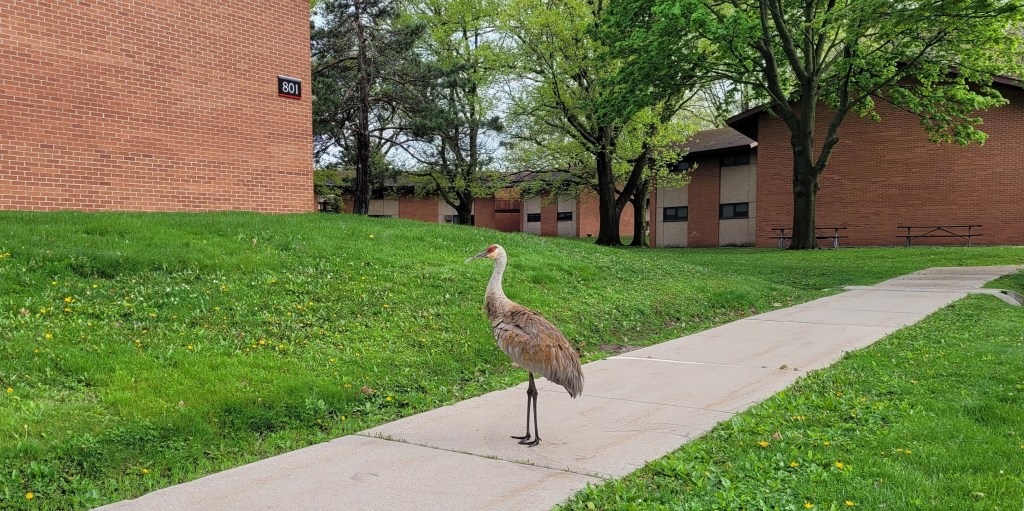
But there will also be successes. Back in the 1930s, only 25 breeding pairs of Sandhill Cranes lived in Wisconsin. Now, thanks to habitat conservation and changes in hunting laws, the state hosts 12,000 cranes in the summer. Because of the efforts of Wisconsinites who came before me, I can now greet Sandhill Cranes as I bike to campus, as I walk in the community gardens, and even—if I get lucky—mere steps from my apartment. That proximity makes it easier for me to connect with them, care about them, and find my place in the natural world.
Sooner than I would like, summer in the nature preserve gives way to fall again. The flowers wilt, the bluebirds and cranes fly south, the gardens provide their last gift of the season. But the lessons remain. The Lakeshore Nature Preserve has shown me what we are losing, why it matters, and how many people are already making amends for our ancestors’ arrogance.
None of us can do everything. None of us will learn how to garden and conduct prescribed burns and band birds and count caterpillars. But with everyone doing something, we can achieve a fundamental shift in our collective relationship with the Earth.
 Scott Hershberger